


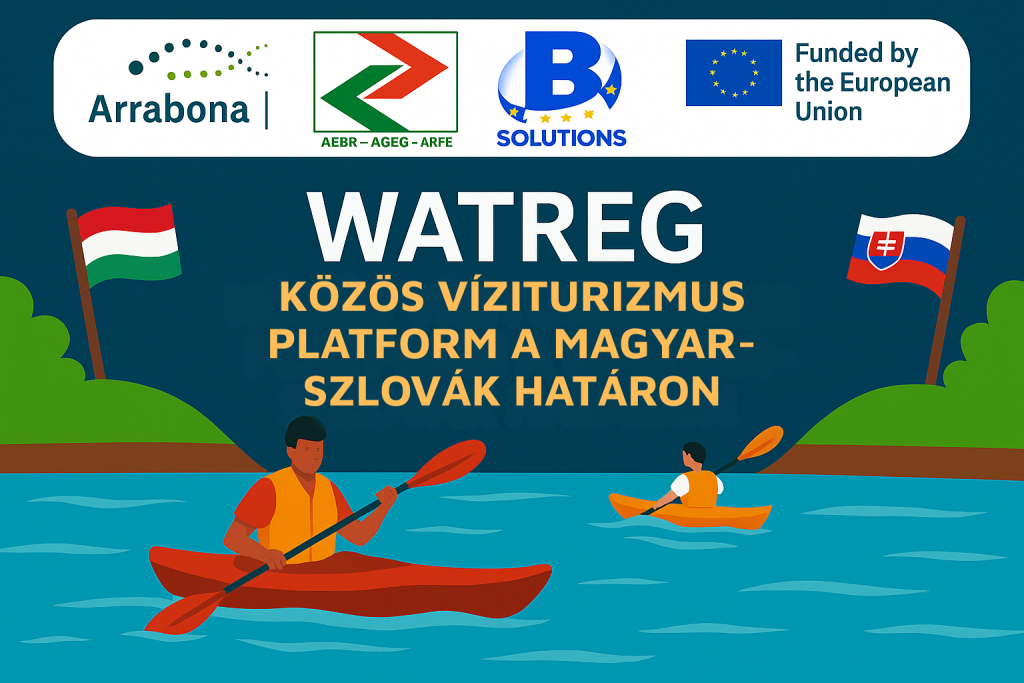
On 4 August 2026, Arrabona EGTC presented the main achievements of the WATREG – Joint Water Tourism Platform for the Hungarian–Slovak Border project during an online dissemination event. The event provided an overview of the professional outputs developed within the project and the practical solutions supporting cross-border water tourism development.
The project focused on comparing Hungarian and Slovak water tourism regulations, with particular attention to the Szigetköz and Žitný ostrov (Csallóköz) regions. The analysis identified regulatory differences, administrative challenges and opportunities to improve safety and accessibility of information for water tourists and tour organisers.
The project delivered:
- a comparative legal analysis of Hungarian and Slovak regulations;
- a structured legal knowledge base;
- a practical summary guide;
- a checklist for water tourists and tour organisers;
- a multilingual online information platform available in Hungarian, Slovak and English.
One of the key findings of the project is that the main barriers to cross-border water tourism arise not from legal gaps but from different regulatory approaches and limited access to information. The new online platform therefore provides easy access to relevant regulations and practical guidance in a single location.
Project outputs are available at:
👉 Arrabona EGTC Water Tourism Knowledge Hub
We would like to thank all stakeholders, tour operators, public authorities, organisations and experts who contributed to the successful implementation of the project.
Funding
Funded by the European Union. The project was implemented within the framework of the b-solutions initiative under the professional coordination of the Association of European Border Regions (AEBR).
Funded by the European Union. Views and opinions expressed are however those of the author(s) only and do not necessarily reflect those of the European Union or the Association of European Border Regions (AEBR). Neither the European Union nor the Association of European Border Regions (AEBR) can be held responsible for them.